Evaluating AI Revenue Expectations Against Capital Expenditure Projections
The AI sector faces scrutiny as revenue projections struggle to align with escalating capital investments, raising questions about financial sustainability.
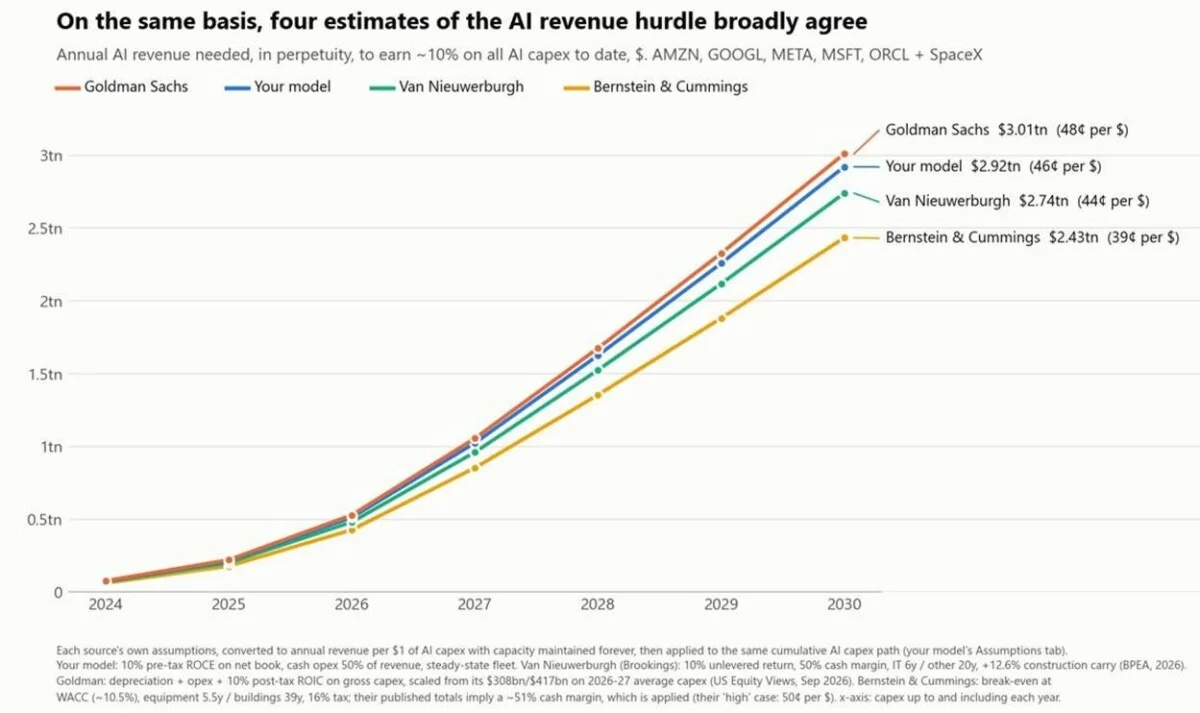
The AI landscape is evolving rapidly, with substantial capital investments being made in anticipation of future revenues. Jared Bernstein and others have analyzed the revenue figures necessary to justify both current and planned expenditures in artificial intelligence. However, there are growing concerns about the mismatch between these revenue projections and the financial markets' expectations.
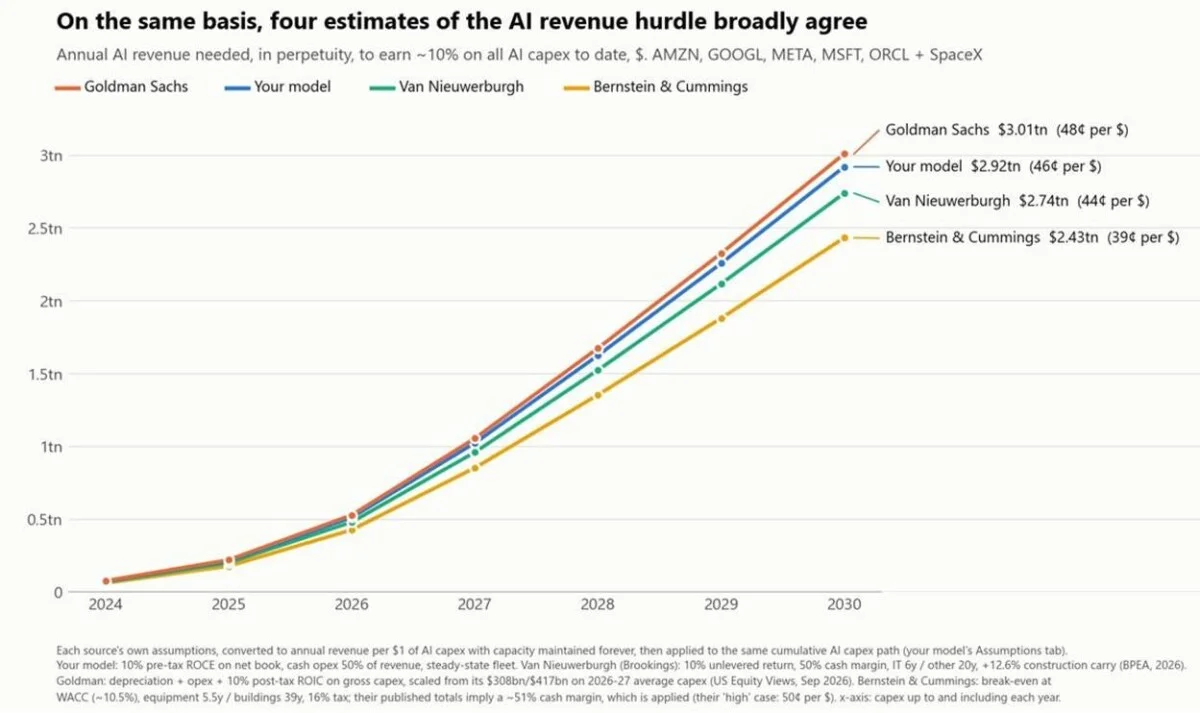
Understanding the Revenue Requirements
Bernstein references a paper by Stijn Van Nieuwerburgh from the Brookings Papers on Economic Activity (BPEA) that delves into this crucial issue. The paper highlights that the anticipated revenue influx from AI services may not materialize within a timeframe that investors find acceptable. Financial markets are inherently impatient, especially with the breadth of capital being funneled into AI projects. This brings to light a critical question: if the revenues are projected to come, where and how will they be generated?
The Risk of Overestimating AI Demand
While it's widely acknowledged that the firm that first captures significant market share in AI services could stand to reap substantial profits, it’s vital to consider the potential fallout for those who lag behind. The competitive pressure in AI innovation can lead to inflated expectations, with firms betting heavily on future returns that may not prove viable. Surveys that gauge planned spending on AI services tend to reflect significant speculative elements, indicating that while companies are keen to invest, their actual spending commitments might lag, leading to a disconnect between projections and reality.
Impacts on Financial Markets
Investors appear to be wary of these speculative revenues. Recent patterns have shown that financing channels for AI expenditures are migrating to more complex, less transparent areas within the financial system. This trend raises concerns over the sustainability of these investments, as firms navigate through financing structures that may not always align with shareholder interests or provide adequate oversight.
Current Valuations and Market Sentiment
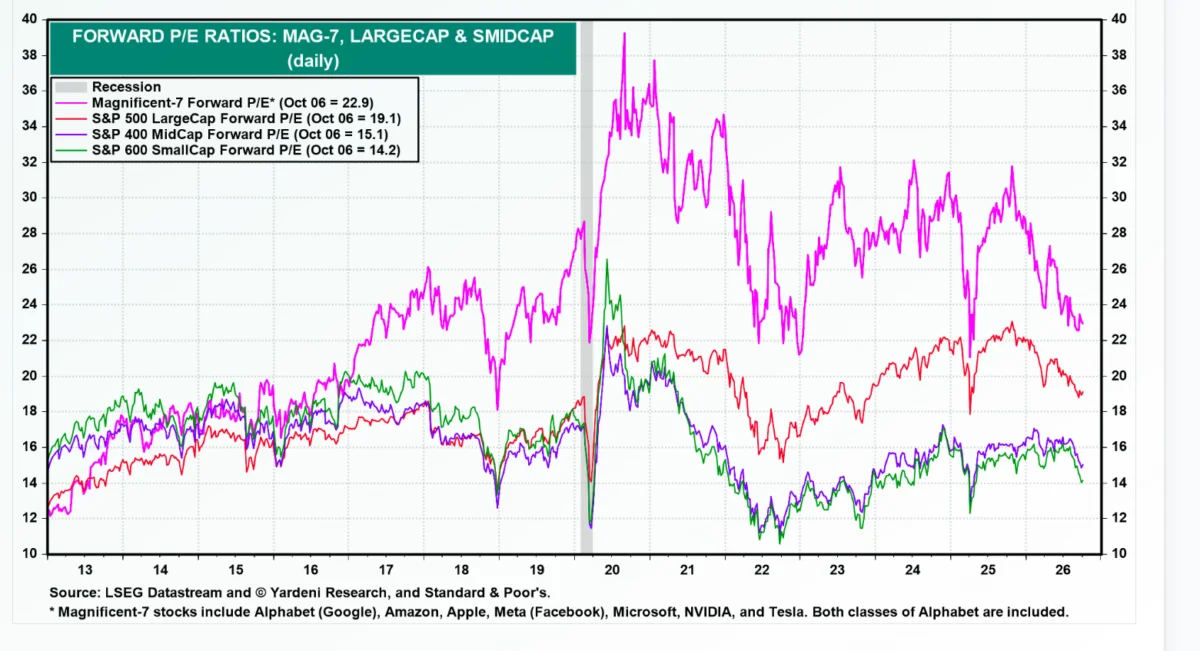
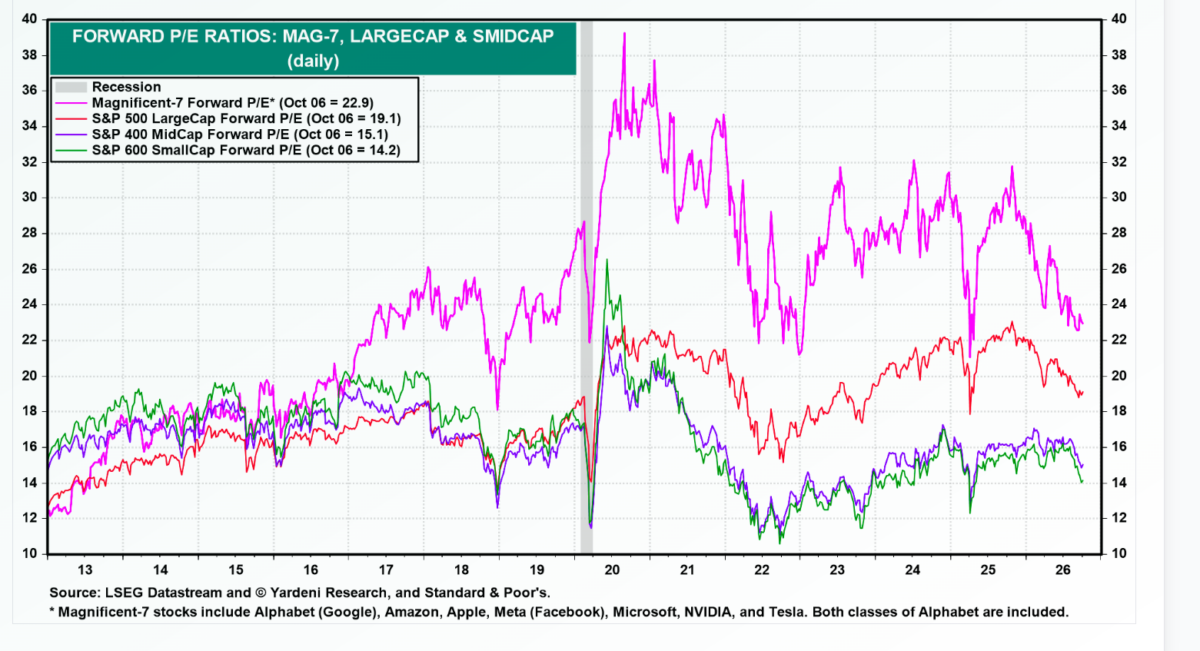
Interestingly, the price-to-forward earnings ratio within the so-called “Magnificent Seven” firms—including tech giants like Apple and Microsoft—currently stands lower than historical averages, despite their diversified revenue streams. Analysts often base these forward earnings projections on expectations, a practice fraught with uncertainty, particularly in a volatile sector such as AI. The ongoing reliance on these forward-looking estimates rather than solid historical performance data puts additional pressure on the credibility of valuation metrics.
Market Context and Comparisons
Historically, sectors that experience rapid technological development often see inflated valuations driven by hype and future earnings projections. However, a pattern of overestimating future revenues can lead to significant corrections. For instance, the dot-com bubble of the late 1990s saw many tech stocks traded at high multiples based on anticipatory growth, only to face harsh downturns as reality set in. Similarly, the AI sector poses risks that could mirror these past market behaviors.
Who Stands to Gain or Lose?
This evolving scenario has implications for various stakeholders: shareholders may face volatile stock prices influenced by speculative earnings forecasts; customers could experience shifting landscapes of service offerings as companies vie for dominance in AI; and employees might find themselves amid organizational changes as firms reassess their strategies based on market performance.
Key Takeaways and What Lies Ahead
As investors and analysts continue to scrutinize the justification for hefty capital investments in AI, the consensus appears to be one of caution. Revenue expectations need to align more closely with realistic assessments of market demand, especially as firms often operate within a framework of uncertainty and speculation. Moving forward, metrics used to evaluate business health in this sector should reflect both potential revenues and the inherent risks associated with lagging behind in a fiercely competitive market.
Careful monitoring of revenue developments in relation to AI investments will be necessary. Stakeholders should remain vigilant about the financial implications of ambitious capital projects in the AI space, lest they fall victim to the pitfalls of overinflated expectations and speculative investments. In the ever-competitive race for AI dominance, understanding and measuring outcomes accurately will be paramount.


