Voter Sentiment on Data Centers Fuels Political Unease in Ohio and Michigan
Rising concerns over data centers impact voter sentiment in Ohio and Michigan, directly influencing key Senate and gubernatorial races amid public outrage.

As electoral campaigns ramp up in Ohio and Michigan, a significant issue looming over the political landscape is the growing dissatisfaction surrounding data centers. These facilities are increasingly constructed on farmland and former industrial sites, causing a stir among local constituents who are voicing their concerns about environmental impacts and rising energy costs.
Local Opposition Rising
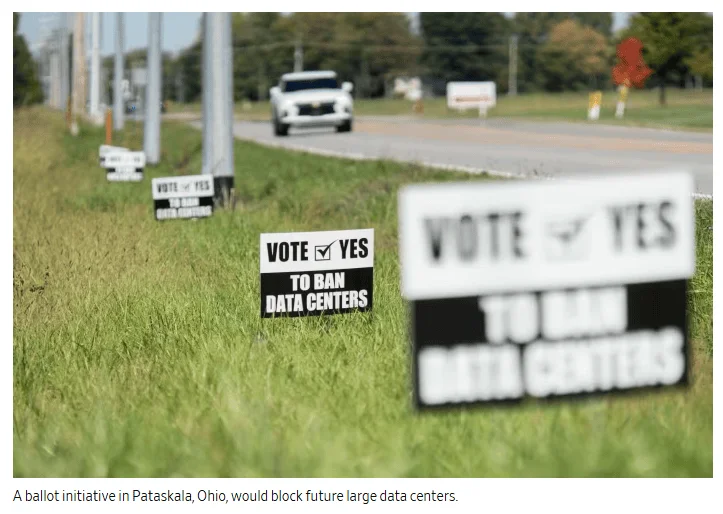
The influence of data centers has extended beyond mere local controversy, becoming a focal point in political discussions. In Pataskala, Ohio, the city council's decision in August to reject a proposed 200-megawatt data center reflects a community's growing resistance. Residents are now pushing for a charter amendment aimed at preventing further data center developments in the area.
Brandyn Bernard, a 37-year-old resident and former Trump supporter, articulated his shift in political allegiance due to the perceived neglect from Republican officials on this issue. He noted his concerns are deeply rooted in health, environmental, and financial factors. Bernard's shift toward supporting Democratic candidates this fall underscores the potential for voter backlash against the ruling party.
Polling Data Highlights Voter Sentiments
Polling data illustrates that the public's ire over data centers is not isolated to specific locales. A September survey conducted by Bowling Green State University revealed that 70% of likely Ohio voters view data centers as detrimental to the environment, while 69% believe they negatively affect home energy costs. An overwhelming 78% of those surveyed support a temporary pause on any further construction.
In Michigan, findings from a Michigan State University poll indicated that over two-thirds of residents oppose local data center projects. Furthermore, a Wall Street Journal national survey revealed that 62% of respondents are in favor of halting data center development, with 39% labeling it as a top priority. This widespread dissent indicates a significant shift in voter priorities that candidates must consider.
Impact on Political Campaigns
The data centers issue has prominently entered the framing of the Ohio Senate race between Republican Jon Husted and Democrat Sherrod Brown. Brown has capitalized on rising voter concerns by emphasizing a need to curb data center expansion as a key aspect of his campaign platform. Notably, television ads from the Brown campaign have labeled Husted as “the face of data centers,” aiming to tie him closely to local discontent.
The Republican administration's earlier decisions to incentivize tech investments—including data centers—have now become potential liabilities. Despite some early bipartisan support for tech investments, the escalating backlash from voters has put candidates like Husted in a precarious position as they navigate public sentiment while attempting to remain loyal to party interests.
Infrastructure and Community Concerns
Data centers, which are frequently built on land previously set aside for agricultural use, are saturating Ohio. The state currently has over 200 data centers either operational, under construction, or planned. Many of these facilities are concentrated along Beech Road in New Albany, a region that has transformed from farmland into a landscape dotted with large, windowless structures. Local traffic and infrastructure have struggled to keep pace with these developments, resulting in potholes and disruptions on two-lane roads.
One local resident exemplified the growing frustration, displaying a sign with a blunt message about the disturbances caused by ongoing construction. The cumulative effect of these changes has become hard to ignore for communities where the landscape has shifted drastically, directly affecting residents' daily lives.
Strategic Concerns for Republicans
The national Republican strategy has become increasingly aware of the risks posed by voter dissatisfaction regarding data centers. In an internal memo issued by the National Republican Senatorial Committee, strategists warned that the data centers issue could heavily affect Husted's campaign, encouraging candidates to pivot their focus toward utility costs instead.
In response, Husted proposed the "Ratepayer Protection Act" to alleviate the financial burden on residents and push costs onto data centers. While House Republicans passed the act, it encountered opposition in the Senate, where Democrats dismissed it as ineffective.
Outlook for Michigan Candidates
The sentiment in Michigan mirrors that of Ohio, with candidates preparing to address mounting voter concerns related to data centers. Polling indicates high probabilities for Democratic candidates, including Abdul El-Sayed for Senate and Jocelyn Benson for Governor, as both aim to capitalize on the dissatisfaction with locality management of data center developments.
Conclusion: A Shift in Voter Priorities
As elections loom, both Ohio and Michigan provide a lens through which the impact of data centers on local communities is becoming increasingly discernible. The potential consequences for incumbents and challengers are notable; candidates must navigate the concerns of their constituents or risk losing their positions amid rising public anger. With voter sentiment clearly shifting, the political landscape in these battleground states could see dramatic changes that reflect broader issues than just local development.