September Producer Price Index Shows Notable Increase, Driving Inflation Concerns
The Producer Price Index rose 1.3% in September 2026, marking the largest spike since March 2022, driven by significant gains in energy and goods prices.
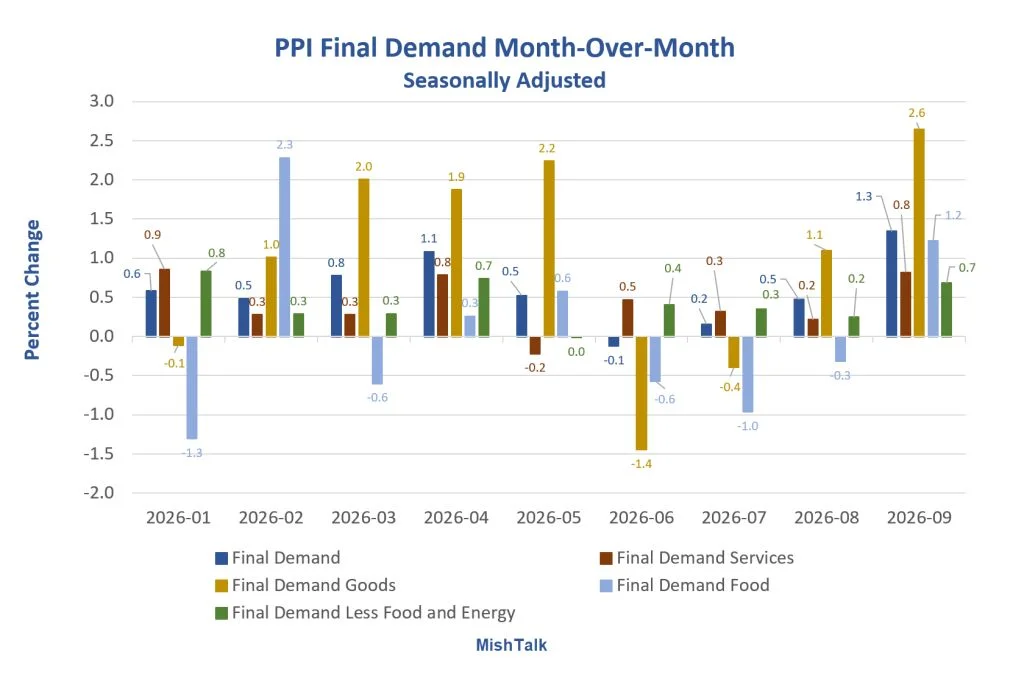
The Producer Price Index (PPI) for final demand saw a sharp increase of 1.3 percent in September 2026, representing the most significant rise since a 1.7 percent surge in March 2022. The recent figures are indicative of ongoing inflation pressures affecting a wide array of sectors and could signal challenges for consumers and businesses alike.
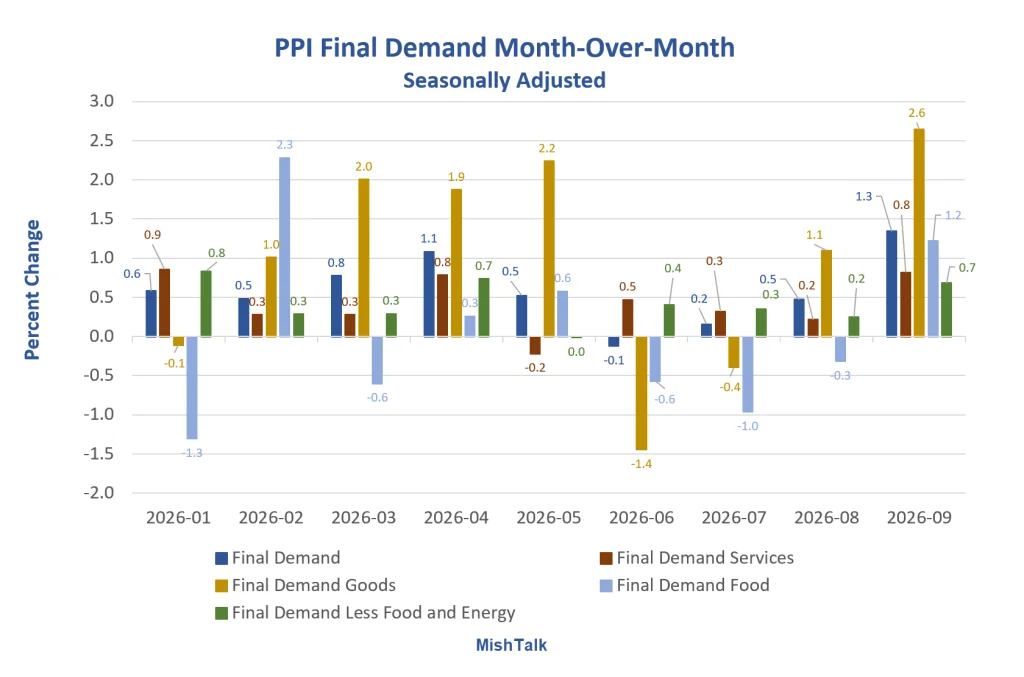
Breakdown of Price Increases
In September, the prices for final demand goods rose by 2.6 percent, while final demand services saw an increase of 0.8 percent. These metrics highlight a substantial change in consumer costs across the board. Notably, the index that excludes food, energy, and trade services moved up by 0.5 percent, continuing the upward trend established in earlier months — 0.3 percent in August and 0.2 percent in July.
Contributions to Final Demand
A significant driver of the rise in final demand goods was the price increase for energy, which jumped 10.8 percent, largely due to soaring gasoline prices that surged 20.3 percent within the month. Following energy, final demand foods rose by 1.2 percent, and other goods less foods and energy recorded a modest increase of 0.3 percent. This combined data points to a complex inflationary environment where the price of essential goods continues to escalate rapidly.
Service Price Dynamics
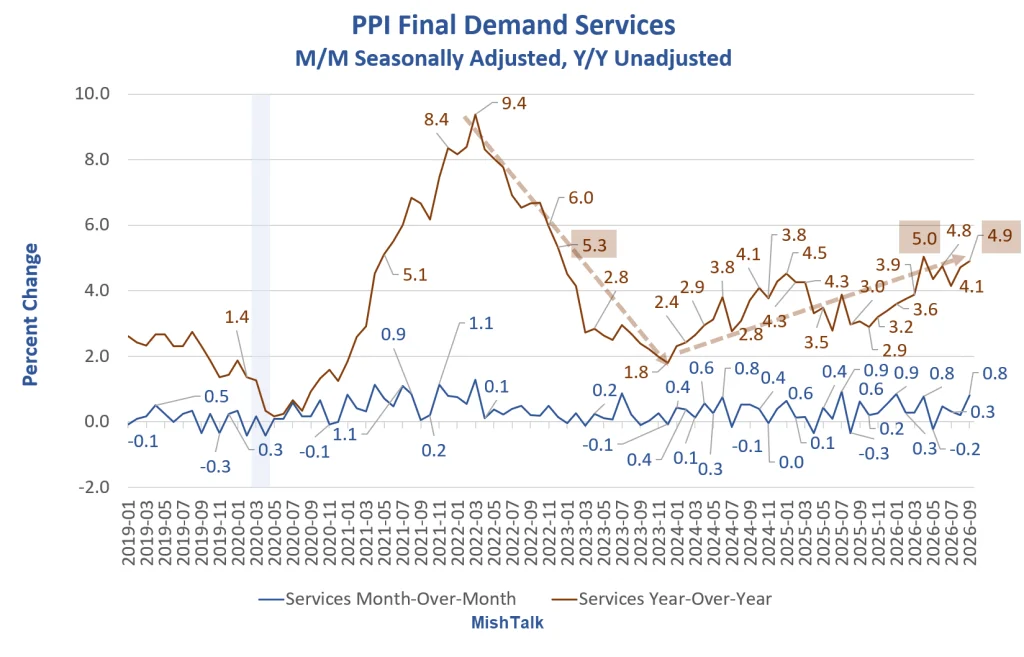
The rise in final demand services at 0.8 percent is the largest experienced since April. Half of the increase can be attributed to a 1.4 percent hike in margins for trade services. Contributing sectors also included transportation and warehousing services, which appreciated by 3.4 percent. The growth here is critical given that services comprise around 68 to 70 percent of the total PPI coverage as of early 2026, indicating that service pricing is a pivotal area in understanding overall inflation trends.
Interestingly, amidst the fluctuations, certain categories witnessed unexpected declines. For example, margins in the retailing of automotive fuels and lubricants fell by 30.3 percent, signaling potential market corrections in these areas.
Year-Over-Year Observations
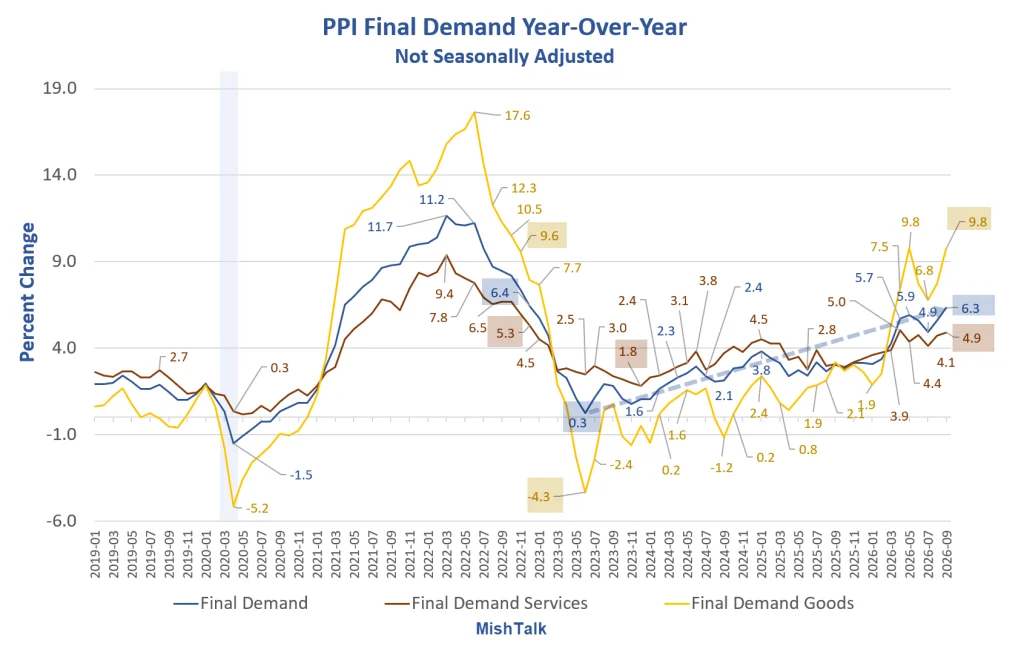
On an unadjusted basis, the final demand index climbed 6.3 percent for the 12 months ending in September, marking the largest yearly increase since a 6.4 percent jump in December 2022. This upward shift indicates the resilience of inflationary pressures, with final demand goods up 9.8 percent and services increasing by 4.9 percent. The trends emphasize the ongoing difficulties manufacturers and service providers face in controlling costs amidst rising input prices.
Historical Context
Examining these shifts through a historical lens offers a clearer perspective on their significance. The 2.6 percent increase in final demand goods is the highest recorded since the PPI began in December 2009. The inflationary context is heightened when considering the consistency of rising prices over preceding months and years, setting a concerning backdrop for economic stability. The year-over-year rise in goods matches figures last noted in late 2022, further underscoring recurring inflationary pressure.
Market Implications
The current inflation dynamics affect various stakeholders, including shareholders, consumers, producers, and service providers. Shareholders may experience volatility as prospects for profit margins narrow due to increasing costs. Consumers, facing higher prices at the point of sale, may alter their purchasing behavior, which can create ripple effects throughout the economy. Additionally, with energy prices historically viewed as an economic bellwether, the current state raises concerns about broader market fluctuations and potential downstream effects on consumer behavior.
Looking Ahead
As we progress further into the reporting year, the trajectory of these price increases warrants close scrutiny. Price pressures, which seem to have a foundation in both commodity price surges and broader economic frustrations, hint at a landscape where inflation might not only persist but potentially escalate. A potential closure of critical transport routes or shifts in fiscal policy could exacerbate these inflationary trends. The economic landscape, particularly as it approaches key electoral cycles and geopolitical tensions, will be crucial in understanding the resilience of inflationary trends.
Understanding these movements in the PPI can provide insights into future Federal Reserve actions, business strategies, and overall market health. As inflationary pressures increase, businesses are faced with critical decisions regarding pricing strategies, cost management, and investment priorities. The next months could be pivotal in determining whether the economy can stabilize or if it continues down this inflationary path.